According to Doctors, I Should Be Bedridden Right Now
So far on this blog I've only managed to write about supplements. But readers who've known me for a while or followed my other channels have probably noticed that I'm pretty deep into this whole health thing.
The whole health thing is personal for me.
I was 24 when I was diagnosed with an incurable debilitating autoimmune disease -- sclerosis multiplex (multiple sclerosis). The doctors told me that from the moment of diagnosis, a "normal" life was no longer possible and that I should prepare for major changes. They were partly right, but not in the way they meant it.
Even a few years ago I genuinely believed I'd never be healthy again. Let alone be in good physical shape, or think of myself as an athlete.
Now, having beaten the disease, I'm more motivated, happier, more confident and more successful than ever before. Looking back, I can see how all my problems were connected.
The kid with weak health
My whole life I've battled weak health. From a very young age I've been hypersensitive to everything: always the first one to get sick, just chronically tired. I didn't even know how to complain about my problems because I thought that's just how things are. I could barely stay awake at my desk in school and had zero motivation or drive for anything else in life.
At one month old, my mother and I went through a trauma that caused her to stop producing breast milk. At the time, even medicine didn't understand just how incredibly important breast milk is for a baby. And we didn't exactly have alternatives either. So I grew up on formula. The kind of formula you could find in a country that had regained its independence just a few months earlier. Not exactly an ideal situation.
As a result of that trauma, when I ended up in the hospital, doctors discovered another previously undetected birth trauma. Good that they caught it, but unfortunately it meant I had to spend my entire first year of life in the hospital.
Hospitals aren't great places to be. Especially for infants. An infant's immune system isn't fully developed yet and hospitals are, by definition, full of sick people. It gets worse when the baby's immune development is already stunted because they're not getting breast milk. As a result, I went through multiple courses of broad-spectrum antibiotics in my first year of life. And the effects of those courses play a major role in my health for the rest of my life.
Over the next couple of decades I managed to go through every possible illness. I've had multiple bacterial pneumonias, severe chronic tonsillitis, high blood pressure, micro-ulcers in my stomach, hormonal imbalances, problems with memory, attention and thinking (cognitive dysfunction), the previously mentioned chronic fatigue, rashes, intolerances and all kinds of other problems that a young person shouldn't have.
By all accounts, I was aging prematurely.
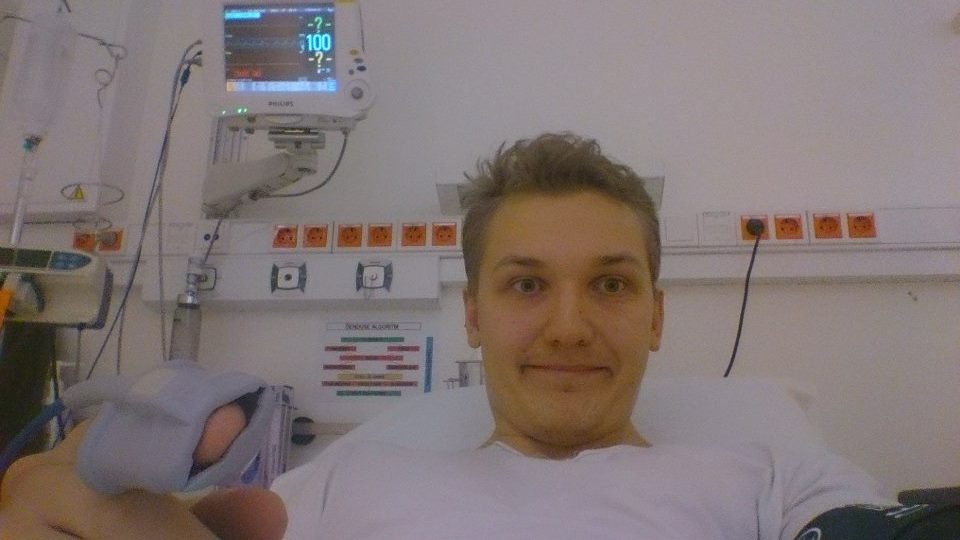
birthday in the hospital, December 2013
Every new problem came with a new course of antibiotics. I've spent birthdays in hospitals, been on blood pressure medication in elementary school and swallowed probes.
In everyday life I was constantly forgetting things: where I was going, what I was supposed to do, and I was just generally absent-minded and slow on the uptake. All in all, I've caused my parents and loved ones a lot of heartache over the course of my life.
My parents have been incredibly supportive my whole life. They've always given me every opportunity and supported my decisions (and my unconventional path through life). Thanks to my mom's attention and help, I managed to do reasonably well in school; my brain did work well for certain things. But as a young person, the bigger problem from my perspective at the time was how hard I found it to socialize.
While other kids were picking up the social (and romantic) skills you need for life in elementary and middle school, I was facing a scary new world governed by rules and norms I didn't understand. Developmentally, I just couldn't keep up. While my peers were growing into young adults, the person staring back at me in the mirror was an immature and frightened boy.
Without realizing it, I dressed, acted and expressed myself in ways that made me stand out -- and not in a good way. It didn't take long for others to notice, and soon I was among the handful of students who were the target of every joke. Bullying can take a young person to very dark places very quickly.
I just didn't understand why all of this was happening to me. Everyone else seemed to have more ability and motivation than I did. Back then, my biggest fear was that I really was just stupid. I was afraid I wouldn't be able to make a living and that I'd never find someone. As an escape, I dove into computer games.
New winds
I've never been someone who follows convention. More precisely, I've never done something just because that's how it's done or because someone told me that's how it has to be. I was raised to be an independent thinker, after all. And despite everything, I've never been the type to just accept a situation and sit around feeling sorry for myself.
At that point I channeled all the negative energy in my life into motivation. Motivation to prove that everyone else was wrong.
In my twenties I discovered a passion for filmmaking and marketing. Surprisingly, I turned out to be pretty good at it -- before long I had clients from around the world and was constantly traveling. It forced me out of my comfort zone and taught me how to deal with people. I opened up, grew, and life kept getting better. My cognitive problems were still serious enough that I couldn't even read articles, let alone books. But I expressed myself through my work.
In December 2015, at 24, I was diagnosed with multiple sclerosis.
Before the diagnosis I had moved to Amsterdam. I was far from family and friends and had to get by on my own in a relatively expensive new country.
I remember feeling strange in various ways, but I thought it was just stress. When I came home for Christmas, I had an appointment with a family eye doctor. He casually asked how I was doing and how I was feeling in general, and I described the strange symptoms I'd been experiencing. He didn't take them nearly as lightly and sent me to a neurologist.
What followed was all sorts of fun medical procedures: radioactive injections, getting intimate with the insides of MRI machines and the joy of experiencing a couple of lumbar punctures.
With a serious expression, the senior neurologist told me I needed to prepare myself for life-altering changes.
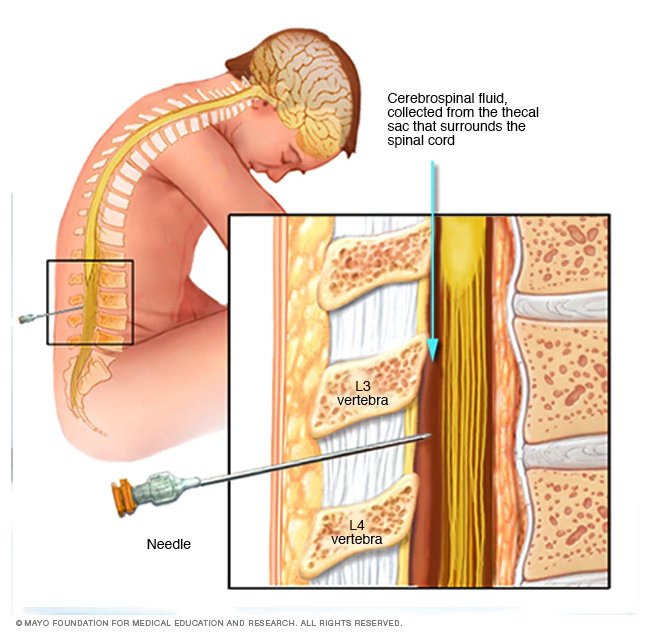
Spinal fluid sample collection
Then they briefed me on my condition.
They described the main treatment methods and all their side effects. On top of that, they scared me with all sorts of other symptoms and problems that could develop if I didn't start treatment immediately. When the conversation got to the part where I'd have to inject myself every other day for the rest of my life with a medication that might (but might not) work, and wouldn't actually cure my condition (since there is no cure), my brain just shut off.
I remember thinking this simply can't be real. Because "things like this don't happen in real life and they don't happen to me." I refused all doctor-prescribed treatments and burned every possible bridge. I simply refused to accept my "fate."
Time went on and over the following months I suffered all kinds of pain, brain fog, all-over-the-place emotions, strange sensations and panic attacks. I quietly slipped into depression and lived through, without even fully realizing it at the time, the darkest period of my life.
"Major life changes"
Coming back to the recurring pattern in my life of not accepting situations, I remember waking up one morning with a fierce resolve. I had a deep understanding that nobody else could fix my health and decided to take the reins myself. The doctors said there was no cure for my disease. So, as a perfectly logical conclusion, I started digging through the depths of the internet for unconventional, high-risk, or just plain illegal ways to experiment with improving my condition.
Starting from the extremes and working backwards, I realized something. Maybe sketchy experimental treatment from Russia isn't the best approach to dealing with my illness? Maybe my disease is actually caused by a bad environment and lifestyle? And maybe all it takes is to get my act together and start living healthy?
Over the years I increasingly spent my free time studying health, biochemistry, cell and microbiology and psychology. I also went deep into all kinds of unconventional, alternative and esoteric approaches.
From this grew a strong passion for everything health-related.

As I write this I'm 28 years old. I'm deeply passionate about everything to do with biology, healthcare, wellness, healthy longevity and biohacking. I'm athletic, in full health and in the best shape of my life. I never would have believed this could be my reality. At the same time, I'm far from ideal and still working daily toward my bigger life goals.
What's the deal?
It's now been more than 4 years since the day I was diagnosed. I've managed to get rid of all my MS-related symptoms without conventional treatment. I'm also convinced that conventional treatment is really just psychological comfort for the system -- a way to feel like "we're helping people" while not actually doing much. They just keep patching symptoms until the patient's condition deteriorates in the background and there's nothing left to patch. Effective pharmacological treatments exist, but unfortunately they're not accessible.
But according to mainstream medicine, MS is still a lifelong diagnosis. There is no cure. Yet it seems that with the right healthy habits, it's possible to live a life free of medication and symptoms. My road to recovery has been long and complicated. And there's still a long way to go.
Based on my own experience, it's even possible to come out of the disease stronger than before. And to live better and happier than before the diagnosis.
I'm writing this because all the knowledge I've gained over the years has helped me enormously. My life (and my entire lifestyle) has completely changed and I'm a new person. I have a huge amount of mental and physical energy. I'm highly motivated, sharper than ever. I read at least a book a week and everything I read sticks. As of writing, I do up to 12 workouts a week and I've found my true passion. On top of that, I've been able to use my knowledge to help others close to me. I'm healthier, happier and more confident than ever before.
I don't have a medical or scientific background. I understand and acknowledge that there are gaps in my knowledge and I might not get everything exactly right. But I'm doing my best to keep learning. Then again, the lack of an academic background (a box) and having an outsider's perspective could arguably be seen as a strength.
It breaks my heart every time I see someone in a situation similar to mine who relies only on outside help and doesn't realize that they actually hold all the power themselves. At the end of the day, everyone has full control over their own body (and exceptions only prove the rule). I feel a moral obligation to share my knowledge, approach and thinking so that those who are searching can find a path to recovery, whatever their situation.
Bad things happen. Situations and people are different. I don't want to diminish the seriousness of anyone's dramatic circumstances or the difficulties that come with them. I also don't want to compare situations. I fully understand that I got off relatively easy, but my point stays the same. In my view, it's irresponsible to rely solely on outside help and only start patching symptoms with pharmaceuticals after getting sick. That doesn't work. Your health and wellbeing starts with small daily habits.
You, who are a thinking person and privileged enough to be reading this article, have a moral obligation to take care of your own health and be responsible for yourself. At the very least so that those who haven't been as fortunate can receive proper care from a medical system that isn't overloaded.
Looking back through everything I've learned so far, I realize how tightly everything is actually connected.
First MS procedures in the hospital, January 2016
I place my trust and beliefs in integrative and functional medicine. Western medicine has its time and place. It's very important for very complex and urgent situations, but Western medicine is absolutely not equipped to deal with conditions caused by environment and lifestyle.
You can think of the integrative approach like this: if you get hit by a car, you don't go to a shaman. First you drag yourself to the ER and get patched up. Then you might seek out slightly more alternative help from a chiropractor who deals with your pain. And then you go to your priest, shaman, or healer who helps you cope with all the associated trauma. The idea of integrative medicine is to apply potentially high-benefit, low-risk approaches alongside conventional treatment. For healthcare professionals: placebo is also an effect.
The idea of functional medicine is to deal with the root causes of disease. Where conventional medicine sometimes treats even type 2 diabetes with insulin, functional medicine sees the futility of just patching symptoms and actually works on reducing sugar in the blood.
Unfortunately, functional medicine isn't (yet) very widespread here, but demand creates supply. Those who seek, find.
Out of a sense of duty I should also mention that just as in conventional medicine you have both very good doctors and extremely incompetent medical professionals, the same applies to functional, natural and alternative practitioners. Good practice is to do your homework and shop around.
And don't underestimate simple health promotion. Seemingly insignificant and "meant for old people" lifestyle changes saved my life. That's also why I feel a personal obligation to share everything I've learned with others.
Fortunately, many of these are now repackaged under the much sexier concept of biohacking. And that's what I'll gradually start sharing with you through my writing.
You don't have to wait until a life-threatening illness hits you before you start living healthier. The goal is to prevent bad situations. It's enough to simply want to feel a little better or improve your already good athletic performance.
Something to think about
But this is all logical, right? Everyone knows that if you live healthy, you'll be healthy. But if it's that elementary, then why are lifestyle-related diseases and conditions more widespread in society than ever before?
Every year, roughly 40 million people die from lifestyle-related diseases. That's approximately 70% of all annual deaths globally.
The problem isn't having this information. The problem is not living by it.
Good things don't have to be complicated -- so don't make them complicated.